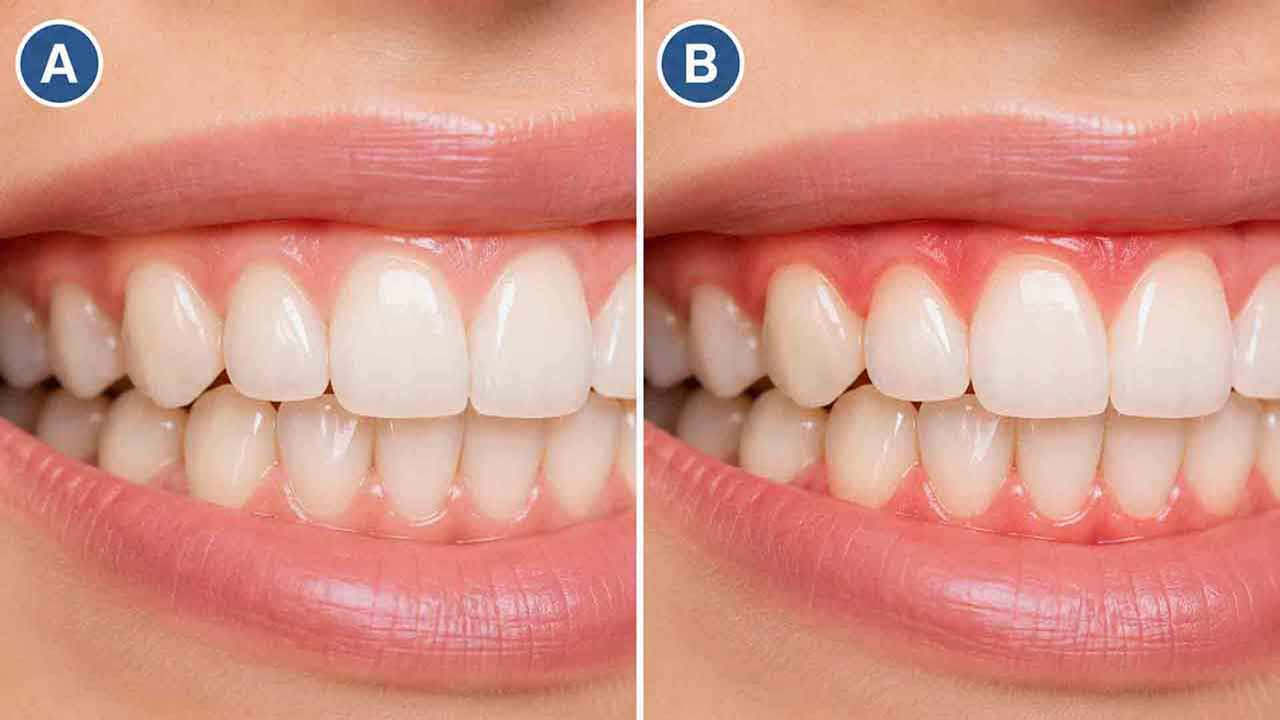
Quick Answer and Key Takeaways
Quick Answer
Common signs of gum inflammation include redness, swelling, tenderness, and gums that bleed easily during brushing or cleaning between teeth. These changes often occur with gingivitis, the mildest form of gum disease. Persistent gum recession, loose teeth, painful chewing, or changes in the bite deserve professional evaluation because they may indicate problems involving deeper tissues that support the teeth.
Key Takeaways
Red gums, swollen gums, tenderness, and repeated bleeding are common gingivitis symptoms.
Gingivitis affects the gum tissue and can often improve when plaque control is improved and appropriate professional care is provided.
Periodontitis is different because it affects deeper supporting structures and can involve periodontal pockets and bone loss.
Plaque can usually be removed through brushing and interdental cleaning, but hardened tartar requires professional removal.
Persistent recession, loose teeth, painful chewing, or bite changes should not be managed simply by brushing harder or adding stronger oral-care products.
This guide explains the most common signs of gum inflammation, how to distinguish everyday irritation from patterns that deserve closer attention, how gingivitis differs from periodontitis, and which daily habits support healthy gums.
It also provides a practical home-check framework and decision process without suggesting that gum disease can be diagnosed from appearance alone.
This guide is based on authoritative dental guidance and practical assessment criteria rather than hands-on product testing.
Which Signs Commonly Suggest Gum Inflammation?
The most noticeable signs of gum inflammation involve changes in color, shape, comfort, and bleeding.
Healthy gums do not look exactly the same in every person. Natural gum color varies with pigmentation, so redness should be judged mainly as a change from your normal appearance rather than against one universal color standard.
Several signs are especially useful to monitor.
Redness
Inflamed gum tissue can become noticeably redder than nearby areas.
The change may appear around one tooth, several neighboring teeth, or a larger part of the gumline.
Red gums can occur when plaque accumulates around the gum margin, but color alone cannot tell you whether inflammation is limited to gingivitis or extends deeper.
A useful question is whether the redness is temporary or repeatedly appears in the same location.
Swelling
Swollen gums may look puffy, enlarged, or less firmly shaped around the teeth.
Instead of following a thin, defined edge around each tooth, the tissue may appear fuller or rounded.
Swelling that persists deserves attention, particularly when accompanied by bleeding, tenderness, bad breath, or visible deposits near the gumline.
Localized swelling also deserves context. A single affected area can have causes that differ from generalized gum inflammation.
Bleeding
Bleeding gums are among the most recognizable signs of gingivitis.
Bleeding can occur during toothbrushing, flossing, interdental brushing, or sometimes while eating firmer foods.
A single episode does not establish a diagnosis.
However, gums that repeatedly bleed in the same areas should not simply be considered normal.
Inflamed tissue can bleed when plaque removal begins, especially if an area has not been cleaned consistently. The appropriate response is usually gentle, effective plaque control rather than abandoning cleaning altogether.
Persistent bleeding deserves professional evaluation.
Tenderness
Tender gums may feel sensitive during brushing, interdental cleaning, chewing, or light pressure.
Gingivitis does not always hurt, however.
This is an important limitation when checking your gums at home.
The absence of pain does not prove that gum tissue is healthy, and significant periodontal disease can sometimes develop without dramatic discomfort.
Tenderness is therefore useful as one piece of information rather than a stand-alone test.
Gum Recession
Gum recession occurs when the margin of the gum moves away from its previous position and exposes more of the tooth or root surface.
A tooth may appear longer than neighboring teeth, or previously covered root surfaces may become visible.
Recession can have more than one cause, including periodontal disease and mechanical factors.
For that reason, visible recession should not automatically be labeled periodontitis.
A new or progressing change deserves professional assessment, especially when it appears with bleeding, sensitivity, tooth mobility, or other periodontal warning signs.
Persistent Bad Breath
Persistent bad breath can occur with periodontal disease, but it is not specific to gum disease.
Food debris, dry mouth, tongue coating, tobacco use, dental problems, and other factors may contribute.
The useful distinction is persistence.
Temporary breath odor after certain foods is different from an ongoing problem that remains despite normal oral hygiene.
When persistent bad breath appears together with red, swollen, or bleeding gums, a dental evaluation can help identify whether periodontal inflammation is contributing.
Loose or Sensitive Teeth
A permanent tooth that begins to feel loose deserves more attention than mild surface redness alone.
Periodontitis can damage the tissues and bone that hold teeth in place.
Tooth mobility therefore represents a different level of concern from ordinary gingivitis symptoms.
Sensitivity may also appear when gum recession exposes root surfaces, although tooth sensitivity has several other possible causes.
A loose tooth should not be managed by simply avoiding the area or brushing more aggressively.
Painful Chewing or Bite Changes
Pain when chewing or a noticeable change in the way upper and lower teeth meet can occur with periodontal problems involving supporting tissues.
These changes are not typical features to dismiss as mild gum irritation.
If chewing becomes uncomfortable or the bite feels different without an obvious explanation, professional assessment is appropriate.
Gingivitis vs. Periodontitis
Gingivitis is inflammation limited primarily to the gums, while periodontitis involves damage to deeper tissues supporting the teeth.
Understanding gingivitis vs periodontitis helps prevent two opposite mistakes: treating every bleeding episode as advanced disease or assuming all gum inflammation can be corrected simply by flossing more.
Gingivitis is the earlier and milder form of gum disease.
Typical signs of gingivitis include redness, swelling, tenderness, and bleeding.
When plaque control improves and professional care is provided when needed, gingivitis can often improve because destructive loss of supporting tissue has not yet occurred.
Periodontitis is different.
It involves inflammatory destruction of structures that support the teeth and may include periodontal pockets, attachment loss, bone loss, gum recession, tooth mobility, or changes in the bite.
Better home hygiene remains essential when periodontitis is present, but home cleaning alone cannot restore lost supporting structures.
Appearance also has limits.
Two people with similar-looking swollen gums may have very different findings below the gumline.
That is why periodontal diagnosis depends on examination rather than photographs or symptoms alone.
How Plaque and Tartar Affect the Gums
Plaque is a sticky bacterial biofilm that continually forms on tooth surfaces.
When plaque repeatedly remains near the gumline, the body's inflammatory response can cause the gums to become red, swollen, or prone to bleeding.
Fresh plaque can usually be disrupted through effective brushing and cleaning between the teeth.
This is why daily oral hygiene is central to gum disease prevention.
Tartar, also called calculus, is different.
Tartar develops when plaque mineralizes and becomes a hardened deposit attached to the tooth.
Ordinary toothbrushes, floss, and water rinsing cannot reliably remove established tartar.
Professional instruments are required.
This distinction creates a practical boundary.
Home care controls removable plaque.
Professional care is needed to remove hardened deposits and evaluate whether inflammation extends below the gumline.
Bleeding During Flossing and Interdental Cleaning
Usually not.
Bleeding can occur because inflamed gum tissue is more likely to bleed when it is disturbed.
Stopping interdental cleaning entirely can allow additional plaque to remain in the same area.
Technique still matters.
Do not snap floss sharply into the gums.
Guide it gently through the contact between the teeth, curve the floss around one tooth surface, clean that surface, and then reposition it against the neighboring tooth.
If traditional floss is difficult to control, another interdental method may be more practical depending on tooth spacing and dental work.
The pattern of bleeding matters more than one isolated event.
If bleeding repeatedly occurs despite consistent and gentle cleaning, or if it appears with swelling, recession, persistent bad breath, loose teeth, or discomfort during chewing, arrange a professional evaluation.
How to Check Your Gums at Home
A home gum check can help you notice changes, but it cannot determine whether you have gingivitis or periodontitis.
The goal is observation, not diagnosis.
First, look at the gumline in good lighting.
Compare the tissue with its usual appearance. Notice whether one area looks redder, puffier, or more irritated than surrounding areas.
Second, pay attention to bleeding.
Notice whether it occurs occasionally or repeatedly in the same location.
Third, check for changes in gum position.
A tooth that suddenly appears longer or a newly visible root surface may indicate recession.
Fourth, think about function.
Ask whether chewing has become uncomfortable, whether a tooth feels mobile, or whether your bite feels different.
Fifth, notice whether the pattern is localized or widespread.
Generalized bleeding can suggest broad plaque-related inflammation, while one repeatedly affected location may deserve examination for a local problem.
A home check cannot measure periodontal attachment or bone levels.
It should help you recognize when professional assessment is appropriate.
What a Professional Gum Examination Looks For
A professional periodontal examination looks beyond what can be seen in a bathroom mirror.
A dentist or dental hygienist can examine gum color, swelling, bleeding, recession, plaque, and tartar.
A periodontal probe can also be used to measure the spaces between the gums and teeth.
These measurements help determine whether deeper periodontal pockets are present.
Medical and dental history also matter because periodontal risk is influenced by factors beyond brushing technique.
Dental X-rays may be used when information about the bone supporting the teeth is needed.
This is why appearance alone cannot reliably distinguish gingivitis from periodontitis.
The diagnosis depends on the combined clinical picture.
A Decision Framework for Gum Changes
Instead of asking only whether your gums look unhealthy, consider the pattern.
Situation 1: Mild Redness or Bleeding After Inconsistent Cleaning
Resume gentle, thorough brushing and daily interdental cleaning.
Watch whether inflammation improves as plaque control becomes more consistent.
If the problem continues, professional evaluation is appropriate.
Situation 2: One Area Repeatedly Bleeds
Continue gentle cleaning and pay attention to the exact location.
If the same site repeatedly bleeds, traps food, catches floss, or appears swollen, have it examined.
A local tartar deposit, restoration, tooth position, or periodontal problem may need attention.
Situation 3: Several Areas Are Red, Swollen, and Bleed Easily
This pattern can be consistent with generalized gingival inflammation.
Improve plaque control and consider professional dental care, especially when hardened deposits are visible or symptoms persist.
Situation 4: Gum Recession Is Increasing
Do not assume recession is simply cosmetic.
Progressive recession can expose root surfaces and may occur alongside periodontal problems.
Professional examination can help determine the likely cause.
Situation 5: A Tooth Feels Loose
Arrange professional evaluation.
Permanent-tooth mobility can indicate changes in supporting structures and should not be treated as routine gingivitis.
Situation 6: Chewing Hurts or the Bite Has Changed
Seek dental assessment.
Painful chewing and unexplained bite changes deserve more attention than mild surface irritation.
How to Help Prevent Gum Inflammation
Gum disease prevention focuses primarily on consistent plaque control and management of relevant risk factors.
Brush Twice Daily
Brush every tooth surface twice a day using fluoride toothpaste and a soft-bristled toothbrush.
Pay particular attention to the gumline without scrubbing aggressively.
Systematic coverage is more useful than excessive pressure.
Clean Between the Teeth Daily
A toothbrush cannot fully clean tight contact surfaces between neighboring teeth.
Use floss or another suitable interdental cleaner once daily.
Interdental brushes may work better in wider spaces, while floss can be useful for tight contacts.
Water flossers can be practical for some people with braces, bridges, or limited dexterity.
The goal is regular plaque disruption rather than using one mandatory tool.
Remove Hardened Deposits Professionally
If a hard deposit remains near the gumline despite normal brushing, do not scrape it with household objects or improvised metal tools.
The material may be tartar.
Professional removal is safer and more appropriate.
Avoid Tobacco
Smoking is an important periodontal risk factor.
Tobacco exposure is associated with greater risk of periodontal disease and can interfere with successful treatment.
Quitting tobacco provides benefits well beyond gum health.
Consider Diabetes and Other Health Factors
Diabetes is associated with periodontal risk.
Medications, hormonal changes, immune conditions, genetics, smoking, and other health factors can also influence the gums.
This does not mean these factors automatically cause periodontal disease.
It means that dental professionals should know about relevant medical history when assessing persistent gum inflammation.
Maintain Appropriate Professional Dental Care
Preventive dentistry combines daily home care with professional monitoring.
Dental visits can identify tartar, persistent inflammation, periodontal pocketing, recession, and other changes that are difficult to assess at home.
The appropriate schedule varies according to individual oral health and periodontal history.
Professional Gum Care and Specialist Evaluation
Professional cleaning can remove tartar that brushing and flossing cannot reliably remove and may be appropriate when inflammation is limited to the gums.
When periodontal disease extends below the gumline, a dentist may recommend additional treatment such as scaling and root planing.
Bleeding alone does not determine which procedure is needed. The decision depends on examination findings, periodontal measurements, and other clinical evidence.
When Might Specialist Evaluation Be Needed?
A general dentist can evaluate many common gum problems and determine whether periodontal disease is present.
If disease is more advanced or requires care beyond routine management, referral to a periodontist may be appropriate.
A referral does not automatically mean surgery. The next step depends on the examination findings and the extent of the periodontal problem.
Real-World Example: Why Bleeding Gums Need Context
Consider an adult who brushes regularly but has not cleaned between the teeth consistently for several months.
After restarting daily interdental cleaning, several areas bleed.
One reaction would be to assume the floss is damaging healthy tissue and stop cleaning those spaces.
A better response is to check the technique, use gentle movements, maintain consistent plaque removal, and monitor whether the gums improve.
Now consider a different pattern.
One lower molar has bled repeatedly for several weeks.
Food frequently becomes trapped beside the tooth, floss catches in the same area, the gum remains swollen, and chewing has become uncomfortable.
That situation deserves professional evaluation because the persistent localized pattern may involve more than inconsistent cleaning.
These examples illustrate an important principle.
One episode of bleeding and a persistent cluster of symptoms do not carry the same information.
Context matters.
Common Mistakes When Responding to Inflamed Gums
Brushing Harder
More force does not automatically remove more plaque.
Aggressive scrubbing can irritate tissue and does not treat deeper periodontal problems.
Focus on coverage and consistency.
Stopping Interdental Cleaning Because the Gums Bleed
Inflamed gums can bleed when plaque is disrupted.
Completely abandoning between-the-teeth cleaning can leave more plaque in place.
Use gentle technique and seek evaluation if bleeding persists.
Relying on Mouthwash Alone
A therapeutic mouthrinse may support some oral-care routines.
It does not physically clean every tooth surface or remove hardened tartar.
Brushing and interdental cleaning remain central.
Scraping Tartar at Home
Hardened tartar is not the same as soft plaque.
Trying to remove it with sharp household tools risks damaging the gums, tooth surface, or dental restorations.
Assuming No Pain Means Healthy Gums
Gingivitis and periodontitis do not always cause dramatic pain.
Visual changes, bleeding, recession, or periodontal measurements can reveal problems even when the mouth feels comfortable.
Assuming Every Bleeding Episode Means Periodontitis
Bleeding is a warning sign, not a diagnosis.
Gingivitis, technique, localized irritation, and other factors may contribute.
A professional examination is needed to determine whether deeper periodontal destruction is present.
Troubleshooting Common Gum Problems
If your gums bleed after restarting flossing, use gentle technique and maintain consistent plaque control. Arrange an evaluation if the bleeding continues.
If floss repeatedly catches or shreds at one location, try another suitable floss but have the site examined if the problem persists.
If several areas remain red despite regular brushing, make sure you also clean between the teeth. Persistent inflammation deserves professional assessment.
If you see or feel a hard deposit near the gumline, do not scrape it yourself. It may be tartar that requires professional removal.
If persistent bad breath continues despite normal oral hygiene, consider professional evaluation because several oral conditions can contribute.
If gum recession seems to be progressing, arrange an examination rather than assuming the change is unavoidable.
If a tooth becomes loose, chewing hurts, or your bite changes, seek professional assessment rather than adding stronger mouthwash or increasing brushing pressure.
If you have diabetes or smoke, make sure your dental professional knows because these factors can affect periodontal risk assessment.
How Different People Should Respond to Gum Inflammation
For Someone Restarting Better Oral Hygiene
If brushing or interdental cleaning has been inconsistent, mild inflammation may become noticeable when plaque control resumes.
Use gentle technique and remain consistent.
If symptoms do not improve, arrange professional evaluation.
For Someone Who Smokes
Smoking increases periodontal risk.
Do not assume the absence of dramatic bleeding means the gums are healthy.
Maintain regular dental care and consider appropriate evidence-based smoking-cessation support.
For Someone With Diabetes
Good oral hygiene and professional monitoring are particularly important.
Tell your dental professional about diabetes and relevant medications so the medical context can be considered during periodontal assessment.
For Someone With Braces
Brackets and wires can make plaque removal more difficult.
Use the tools recommended for the appliance, which may include orthodontic floss, floss threaders, interdental brushes, or water flossers.
For Someone With Gum Recession
Do not brush harder in an attempt to clean exposed areas.
Use gentle technique and arrange evaluation if recession progresses or sensitivity develops.
For Someone With a History of Periodontitis
Continue the individualized maintenance plan recommended by your dental team.
Symptom improvement does not mean professional monitoring is no longer necessary.
Daily plaque control and ongoing professional care serve different but complementary roles.
A Gum-Health Checklist
Check whether your gums appear redder or more swollen than usual.
Notice whether brushing or interdental cleaning repeatedly causes bleeding.
Pay attention to tenderness that persists.
Look for changes in gum position or teeth appearing longer.
Notice persistent bad breath that does not improve with routine hygiene.
Pay attention to food repeatedly collecting around one location.
Do not ignore a permanent tooth that begins to feel loose.
Take painful chewing or unexplained bite changes seriously.
Brush twice daily and clean between teeth every day.
Do not try to scrape hard tartar deposits away yourself.
Tell your dental professional about smoking, diabetes, medications, and relevant health conditions.
Seek professional evaluation when symptoms persist, worsen, or suggest involvement of deeper supporting tissues.
The Practical Bottom Line
The most common signs of gum inflammation include redness, swelling, tenderness, and bleeding.
These changes often occur with gingivitis, particularly when plaque remains around the gumline.
For someone with mild inflammation and inconsistent oral hygiene, the first practical step is gentle twice-daily brushing and daily cleaning between the teeth.
For someone whose gums continue to bleed or remain swollen despite consistent plaque control, professional evaluation can determine whether tartar, persistent gingivitis, or another problem is involved.
For someone with progressive gum recession, loose teeth, painful chewing, or changes in the bite, evaluation becomes more important because these findings can occur when deeper supporting tissues are affected.
Professional care also has different levels.
Routine cleaning may be sufficient when hardened deposits need removal and inflammation remains limited to the gums. Scaling and root planing is used when examination findings indicate periodontal disease below the gumline. It is not simply a more intensive cleaning that every person with bleeding gums needs.
The most useful approach is therefore balanced.
Do not ignore persistent signs of gingivitis, but do not assume that every episode of bleeding represents severe periodontal disease.
Notice the pattern, maintain effective plaque control, consider personal risk factors, and seek professional evaluation when symptoms continue or become more concerning.
Sources
Centers for Disease Control and Prevention. About Periodontal Disease. Information on gingivitis, periodontitis, symptoms, periodontal warning signs, risk factors, prevention, and professional care.
Centers for Disease Control and Prevention. Gum Disease Facts. Information on gingivitis, periodontitis, prevention, and risk factors.
National Institute of Dental and Craniofacial Research. Periodontal Gum Disease. Information on plaque, tartar, gum inflammation, periodontal examinations, bone loss, prevention, and treatment.
National Institute of Dental and Craniofacial Research. Ask the Expert: Do I Really Need to Floss? Information on interdental plaque, calculus, gingivitis, periodontitis, and daily cleaning between the teeth.
National Institute of Dental and Craniofacial Research. Oral Hygiene. Guidance on brushing, interdental cleaning, plaque, tartar, gingivitis, and professional dental care.
American Dental Association. Dental Floss and Interdental Cleaners. Guidance on plaque removal, flossing, interdental brushes, water flossers, tartar, and gum health.
American Dental Association, MouthHealthy. Scaling and Root Planing for Gum Disease. Patient guidance on periodontal examination, scaling and root planing, and treatment below the gumline.
American Academy of Periodontology. Non-Surgical Periodontal Treatments. Patient information on scaling and root planing and periodontal maintenance.
American Academy of Periodontology. What Is a Periodontist? Information on the role of periodontal specialists.
Educational Note
This article provides general oral-health information. It does not diagnose gingivitis, periodontitis, or other dental conditions and does not replace individualized examination, diagnosis, or treatment from a dentist or periodontal specialist.