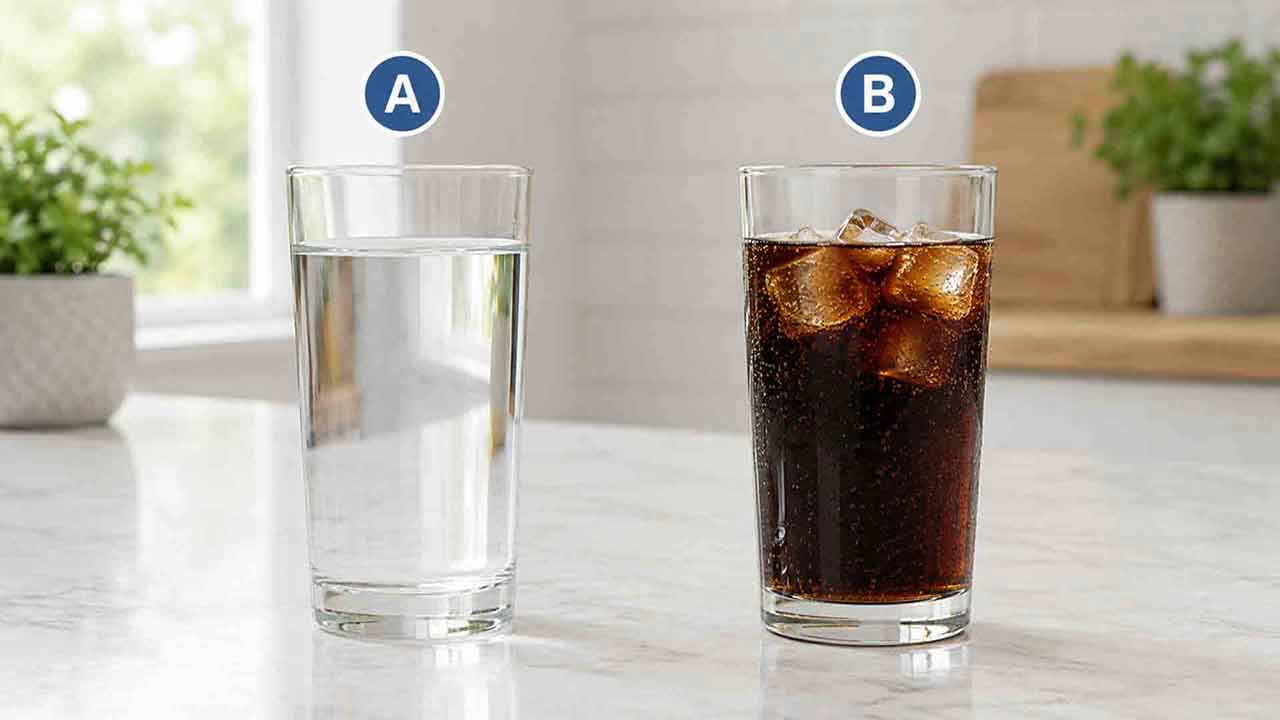
Plain Water vs. Sports Drinks: Which Is Truly Tooth-Friendly?
For everyday hydration, plain water is generally the more tooth-friendly choice. It contains no fermentable sugar and, unlike many sports drinks, does not repeatedly expose enamel to added dietary acids. Sports drinks can have a legitimate role during demanding exercise, but frequent or prolonged sipping can increase exposure to conditions associated with dental erosion and tooth decay.
Key Takeaway 1: Plain water is the default choice for dental health because it does not add sugar or dietary acid to the mouth.
Key Takeaway 2: Sports drinks can affect teeth through two different pathways: direct acid erosion and, when sugar is present, bacteria-driven tooth decay.
Key Takeaway 3: Sugar-free does not automatically mean tooth-friendly. An acidic sugar-free drink can still contribute to enamel erosion.
Key Takeaway 4: Frequency matters. Repeated sipping keeps teeth exposed to acidic conditions more often than drinking the same beverage during a limited period.
Key Takeaway 5: Sports hydration should be individualized. Exercise intensity, duration, sweat losses, environment, diet, and recovery needs matter more than a simple time-based rule.
This guide helps readers choose between plain water and sports drinks based on oral-health risk and exercise needs. It also provides a practical hydration framework, label-reading checklist, athlete scenarios, enamel-protection steps, common mistakes, and guidance on when dental symptoms deserve professional evaluation.
Plain Water vs. Sports Drinks: Which Is Better for Enamel?
For routine drinking and most everyday situations, plain water is the safer choice for tooth enamel. Sports drinks may provide useful carbohydrates or electrolytes in some athletic situations, but those benefits need to be weighed against the drink's acidity, sugar content, frequency of exposure, and individual dental risk.
Comparison: Plain water usually contains no added sugar, no added dietary acids, and has very low enamel erosion potential under normal use. A typical sports drink may contain sugar and added acids, so its effect on enamel depends on formulation and how often it contacts the teeth. Sports drinks may also provide sodium, other electrolytes, and carbohydrate energy that can be useful during demanding exercise.
Dental erosion and tooth decay are not the same process. Dental erosion is the chemical loss of mineralized tooth structure caused by acids that do not originate from oral bacteria. Tooth decay involves bacteria using dietary sugars or starches and producing acids that remove minerals from enamel.
How Do Sports Drinks Affect Tooth Enamel?
Sports drinks can expose enamel to dietary acids, while sugar-containing versions can also provide fuel for acid-producing plaque bacteria. That combination is why frequent sports-drink consumption deserves more dental attention than occasional use during a demanding event.
Dental erosion is the direct chemical loss of tooth mineral caused by acids not produced by bacteria. Frequent consumption of low-pH soft drinks, sports drinks, and fruit juices is recognized as a risk factor for erosive tooth wear. Erosive potential cannot be predicted by pH alone because beverage composition, acid type, buffering capacity, mineral content, exposure pattern, saliva, and individual susceptibility all influence the outcome.
Tooth decay involves bacteria metabolizing fermentable carbohydrates and producing acids that cause repeated mineral loss. Saliva supplies calcium and phosphate, while fluoride from toothpaste, water, and other sources can support remineralization of early mineral loss. When acid attacks occur too frequently, mineral loss can outpace repair and eventually lead to a cavity.
This is why Tooth Decay Prevention involves more than avoiding obviously sweet foods. How often the teeth are exposed to sugars and acids also matters.
Is the pH Number Enough to Tell Whether a Drink Is Tooth-Friendly?
No. pH is useful, but it is not a complete dental-risk score. Many acidic beverages associated with erosion have low pH values, but buffering capacity, acid type, mineral composition, exposure frequency, and saliva also influence erosive potential.
Laboratory and in-situ research comparing water with sports-drink formulations has shown that formulation changes involving calcium and pH adjustment can substantially alter enamel erosion. Two beverages that are both labeled as sports drinks do not necessarily behave identically.
A better beverage-assessment framework asks five questions: Does it contain added sugar? Does it contain added food acids such as citric or phosphoric acid? How often will it contact the teeth? Is it being used for a real exercise need? Does the person already have erosion, dry mouth, sensitivity, or another dental risk factor?
This framework is intentionally qualitative. A single pH value cannot tell you exactly how much enamel an individual will lose.
When Might a Sports Drink Be More Useful Than Plain Water?
A sports drink may be useful when exercise creates meaningful carbohydrate, fluid, or electrolyte replacement needs, but those needs vary substantially between people and activities. Hydration plans should consider sweat rate, environment, acclimatization, body size, exercise duration, intensity, diet, and individual tolerance.
Many recreational athletes can manage fluid balance with water, thirst-guided drinking, and a normal diet. Competitive athletes with substantial sweat or fueling demands may require more structured strategies.
The 4-Factor Tooth-Friendly Hydration Framework
Factor 1 — Exercise demand: A short, comfortable workout and a long race in hot weather create very different hydration and fueling requirements.
Factor 2 — Sweat loss: Someone who finishes a workout barely damp does not have the same electrolyte-replacement needs as an athlete who experiences heavy sweat losses.
Factor 3 — Carbohydrate need: During prolonged or intense training, carbohydrate intake may be part of a broader performance plan. During normal desk work or a casual walk, it usually serves no sports-performance purpose.
Factor 4 — Tooth exposure: Dental risk increases when an acidic or sugary beverage is repeatedly held, swished, or sipped over a long period. Reducing unnecessary contact time is a practical form of Enamel Erosion Protection.
Which Drink Fits Different Real-World Situations?
Working at a desk or taking a casual walk: Plain water is usually the most practical choice because there is no performance need for repeated sugar or acid exposure.
Typical gym strength session or recreational run in moderate conditions: Water is sufficient for many people, although individual hydration needs can vary.
Long endurance training or heavy sweating in heat: An individualized hydration and fueling plan may justify a sports drink because carbohydrate and electrolyte replacement can become relevant.
People with known enamel erosion or sensitivity: Plain water should be the default whenever practical because it avoids unnecessary dietary-acid exposure.
Children and teen athletes: Water should remain the default everyday beverage, while sports drinks should be matched to actual exercise and hydration needs rather than used automatically at every practice.
Real-World Example: Gym Session vs. Long Cycling Event
Scenario A — 45-minute indoor gym session: A recreational exerciser trains indoors, begins well hydrated, and eats a normal meal afterward. Plain water is the simplest choice because there is little reason to turn the workout into repeated exposure to sugar and dietary acid purely because a bottle is marketed for sports.
Scenario B — two-hour cycling session in hot weather: A cyclist completes a demanding session, sweats heavily, and needs both fluid and carbohydrate during training. A sports drink may form part of an individualized fueling strategy. The dental goal is not to ignore the performance need, but to reduce unnecessary tooth contact by drinking deliberately, using water when practical afterward, and maintaining normal fluoride-based oral hygiene.
The practical rule is simple: water by default, sports drinks by purpose.
How Can You Make Sports Drinks Less Harmful to Teeth?
If you need a sports drink, reducing the frequency and duration of acid exposure is more realistic than expecting one trick to make the drink harmless.
Step 1: Use sports drinks only when they serve a specific exercise or recovery purpose.
Step 2: Avoid swishing or holding the drink around your teeth because prolonged contact increases acid exposure.
Step 3: Drink in planned periods rather than casually sipping for hours. Frequency of acidic exposure matters in erosive tooth wear.
Step 4: Use plain water afterward when practical to help clear residual acids and sugars from the mouth.
Step 5: Keep using fluoride toothpaste as part of normal oral hygiene because fluoride supports tooth decay prevention and remineralization of early mineral loss.
Step 6: Do not rely on immediate aggressive brushing as a solution. Rinsing with water is a better immediate response after acidic drinks, while reducing acid frequency and maintaining fluoride-based oral care are more important than treating any specific waiting period as a magic rule.
Should You Drink Sports Drinks Through a Straw?
A straw may reduce contact with some tooth surfaces when positioned appropriately, but it does not make an acidic beverage risk-free. Positioning a straw behind the front teeth may reduce bathing of those surfaces. Think of a straw as a secondary exposure-control measure, not permission to sip an acidic drink all day.
How Do You Choose More Tooth-Friendly Drinks?
The most reliable everyday choices are beverages that avoid unnecessary sugar and added dietary acid. Among Tooth-Friendly Drinks, plain still water remains the easiest default because it avoids both added sugars and dietary acids.
Beverage label checklist: Check added sugars; look for citric acid or other added acids; identify whether the drink is intended for hydration, carbohydrate fueling, or simple flavor; consider whether you will drink it once or sip it for several hours; compare flavored and plain versions; and consider your own dental risk, including sensitivity, enamel wear, dry mouth, and acid reflux.
Where fluoridated community water is available, it can also contribute to Tooth Decay Prevention by providing regular low-level fluoride exposure.
Are Sugar-Free Sports Drinks Safe for Enamel?
Sugar-free sports drinks generally remove one cavity-related concern—fermentable sugar—but they may still contain acids capable of contributing to dental erosion. Acidity matters independently of sweetness.
Sugar-free does not mean acid-free. Check the full ingredient list rather than relying only on the nutrition label's sugar number.
What Common Hydration Mistakes Increase Dental Risk?
Mistake 1 — Using sports drinks as an all-day beverage. A performance drink designed for exercise does not automatically make sense at a desk, in the car, or beside the bed. Better approach: make water the default and reserve sports drinks for situations in which their ingredients serve an actual purpose.
Mistake 2 — Taking tiny sips for several hours. Repeated exposure extends the number of acidic challenges reaching the teeth. Better approach: when a sports drink is genuinely needed, use it according to a defined fueling or hydration strategy rather than casual continuous sipping.
Mistake 3 — Assuming zero sugar means safe for enamel. Removing sugar does not remove citric acid or other dietary acids. Better approach: evaluate sugar and acidity separately.
Mistake 4 — Swishing before swallowing. That increases contact between the beverage and tooth surfaces. Better approach: sip and swallow without deliberately bathing the teeth.
Mistake 5 — Treating pH as the only important number. Two drinks with similar pH can have different buffering characteristics and mineral composition. Better approach: consider formulation, exposure frequency, sugar content, and personal risk together.
What Should You Do If Your Teeth Are Already Sensitive or Worn?
Persistent sensitivity, visible wear, or changes in tooth shape deserve professional assessment rather than self-diagnosis. Possible signs of erosive tooth wear include changes in enamel texture, flattened or cupped surfaces, exposed dentin, and hypersensitivity.
New cold sensitivity may reflect exposed dentin, tooth decay, or another dental problem. Teeth that look increasingly yellow may have thinner enamel revealing more underlying dentin. Thinner or translucent edges, small depressions or cupping, frequent cavities, or persistent pain should also be evaluated by a dentist.
What Does Acid Erosion Treatment Usually Involve?
Acid Erosion Treatment depends on the cause and severity; there is no universal home treatment that replaces a dental diagnosis. Management usually begins with identifying and reducing erosive exposures. Depending on the individual situation, professional care may involve dietary changes, preventive strategies, sensitivity management, fluoride-based approaches, or restorative treatment.
Dentist Recommendations should also account for causes beyond beverages. Reflux, recurrent vomiting, low salivary flow, medication-related dry mouth, and other factors can contribute to erosive tooth wear.
When Might Restorative or Cosmetic Treatment Be Needed?
Advanced tooth wear sometimes requires treatment to restore function, protect damaged structure, or address appearance, but not everyone with mild erosion needs restorative dentistry.
When substantial tooth structure has been lost, a dentist may discuss Restorative Dental Work such as adhesive restorations or crowns depending on the individual case. If wear changes the shape or appearance of visible teeth, patients may also discuss Cosmetic Dentistry Services, including procedures intended to restore tooth form or appearance.
The correct treatment should be based on the underlying cause and amount of remaining tooth structure, not on cosmetic concerns alone.
Dental Insurance Coverage varies by plan, diagnosis, treatment, and whether a procedure is classified as restorative or cosmetic. Before significant treatment, ask the dentist for the diagnosis and alternatives, request a written treatment estimate, ask the insurer whether preauthorization or a predetermination of benefits is available, and compare estimated benefits with expected out-of-pocket costs.
Practical Recommendations by User Type
Everyday adults: Make still water your main hydration drink. Save sports drinks for situations where carbohydrate or electrolyte replacement actually contributes to your activity or recovery plan.
Recreational gym-goers: Start with water rather than assuming every workout requires a specialized beverage. If you repeatedly finish long or demanding sessions with substantial sweat loss, assess hydration more systematically.
Endurance athletes: Performance needs may justify carbohydrate-electrolyte beverages. Balance those needs with Enamel Erosion Protection by limiting unnecessary oral exposure, using water strategically, and maintaining regular dental preventive care. Hydration and sodium strategies should be individualized rather than copied from another athlete.
People with existing enamel erosion: Plain water should generally be the default beverage unless another drink serves a specific nutritional or medical purpose. Ask a dentist to review dietary acids, possible reflux, brushing technique, fluoride use, and other contributors rather than focusing on one beverage alone.
Parents of young athletes: Avoid making sports drinks the automatic drink for every practice. Youth hydration needs should be individualized, with water remaining the default everyday beverage.
Practical Conclusion: What Should You Drink?
For everyday hydration and dental health, plain water wins. Sports drinks are not inherently bad, but they are specialized beverages. Their carbohydrates and electrolytes may be useful during certain demanding activities, while their acids—and sugars in many formulations—create trade-offs for teeth.
The simplest rule is: Water by default. Sports drinks by purpose.
Next steps: Choose plain water for everyday hydration. For routine gym workouts, begin with water unless training creates a specific fueling need. For long or demanding exercise, use an individualized hydration plan. If you regularly use sports drinks, reduce continuous sipping and use water afterward when practical. If you have sensitivity or visible enamel wear, schedule a dental assessment rather than trying to treat the problem yourself.
FAQ: Can Sports Drinks Cause Cavities Even If I Brush Twice a Day?
Yes, sugar-containing sports drinks can still contribute to cavity risk because oral bacteria use fermentable carbohydrates to produce acids. Brushing with fluoride toothpaste is important, but it does not make repeated sugar exposure irrelevant. Frequency and overall diet still matter.
FAQ: Is a Sugar-Free Sports Drink Better for Teeth?
It removes the sugar-related component of cavity risk, but an acidic sugar-free sports drink may still contribute to dental erosion. Check for acidic ingredients rather than looking only at sugar content.
FAQ: Does Water Actually Rebuild Enamel?
Water itself does not regenerate enamel that has been physically lost. However, saliva supplies calcium and phosphate, and fluoride can support remineralization of early mineral loss before a cavity forms. Established erosive loss of tooth structure is irreversible.
FAQ: Is Sparkling Water as Tooth-Friendly as Still Water?
Still water is the simplest low-risk choice. Carbonation makes water more acidic, and flavored sparkling beverages may contain additional acids. The dental effect depends on the exact formulation and how frequently it is consumed, so people with known erosion may prefer still water as their main drink.
FAQ: Should I Brush Immediately After Drinking a Sports Drink?
It is generally better to rinse with water rather than brush immediately after an acidic drink. However, delaying brushing alone is not a complete erosion-prevention strategy. Reducing acid exposure and maintaining fluoride-based oral care remain more important than relying on a single timing rule.
FAQ: When Should I See a Dentist About Enamel Erosion?
Arrange an evaluation if you notice persistent sensitivity, yellowing associated with apparent enamel thinning, changes in tooth shape, cupping, smooth worn surfaces, or other progressive changes. A dentist can determine whether the cause is dietary acid, reflux, tooth grinding, abrasion, decay, or another condition.