Why Your Credit Score Dropped (And How to Start Improving It)
A credit score drop can feel more personal than it should.
You open an app, see a lower number than last month, and your brain goes straight to the worst version of the story:
Did I do something seriously wrong?
Did one late payment ruin everything?
Is this going to hurt my next application?
Is something fraudulent happening?
That reaction is understandable.
It is also usually too fast.
Because a credit score drop is not a moral judgment.
It is a reaction to data.
And the useful question is usually not:
“Why did my score betray me?”
It is:
“What changed in my credit report, and which change matters most right now?”
That is the question this guide is built to answer.
The most useful idea to remember from the start is this:
Most credit score drops happen because the file started to look more risky than it did before.
That can happen because of a missed payment, higher balances on credit cards, new applications, a closed account, a collection, an error, or fraud.
Some causes are slower to address.
Some may improve relatively quickly once the underlying issue changes.
The key is not panic.
The key is diagnosis.
Key Takeaways
A credit score drop usually means something in your credit report changed.
Small drops are often tied to utilization, statement timing, or a recent inquiry.
Bigger drops deserve prompt review because they may signal a late payment, collection, fraud, or report error.
The appropriate response depends on the actual cause, not on generic score-improvement tricks.
The best first move is usually to pull your reports, identify the newest meaningful change, and stop fresh damage before trying to optimize anything. Credit monitoring can help you spot new activity, but it does not replace reviewing the underlying reports.
Why You Can Trust This Guide
This guide is based on public consumer-credit guidance and primary scoring resources, including the Consumer Financial Protection Bureau, AnnualCreditReport.com, IdentityTheft.gov, and myFICO.
AnnualCreditReport.com:
https://www.annualcreditreport.com/
CFPB credit reports and scores:
https://www.consumerfinance.gov/consumer-tools/credit-reports-and-scores/
IdentityTheft.gov:
https://www.identitytheft.gov/
myFICO:
https://www.myfico.com/credit-education/whats-in-your-credit-score
It is written for ordinary readers trying to understand score drops in practical terms rather than chase unrealistic credit-score claims.
It is also written with a practical goal in mind: helping you separate routine movement from real damage, and issues where immediate action may help from issues that generally require longer-term rebuilding.
Who This Article Is For
This guide is especially useful if your credit score dropped and you are not sure why.
It can also help if a credit monitoring alert showed a new balance, inquiry, or account change and you want to understand what it means.
It is designed for readers who want to know whether a drop appears routine, moderate, or serious, and who want a practical response based on the underlying cause.
It can also be useful if you are about to apply for credit and need to understand what changed first.
Who This Article Is Not For
This article may not be enough on its own if you are dealing with active identity theft involving new accounts or stolen personal information.
It may also be insufficient for legal disputes around debts or collections, bankruptcy timing questions that need individualized legal advice, business-credit report issues, or highly specific mortgage-underwriting situations involving lender-specific rules.
In those situations, this guide can still help you organize the issue, but it should not replace more specific professional support.
How This Article Was Reviewed
This guide was reviewed against a simple standard.
Does it explain why score drops happen in plain English?
Does it separate small, moderate, and severe score-drop causes?
Does it distinguish issues where immediate action may help from slower-recovery issues?
Does it point readers toward authoritative public resources where that helps?
That standard matters because consumer-credit information can become misleading when it creates unnecessary panic or suggests that every score change has the same cause or solution.
Disclaimer
This article is for educational purposes only.
It is not individualized financial, legal, lending, or tax advice.
Credit scores vary by bureau, scoring model, and reporting timing.
Lenders may also use underwriting criteria beyond your credit score.
Official Resources to Check First
If your score dropped and you want authoritative public resources first, start here.
Official credit reports:
https://www.annualcreditreport.com/
CFPB credit-report dispute guidance:
https://www.consumerfinance.gov/ask-cfpb/how-do-i-dispute-an-error-on-my-credit-report-en-314/
CFPB credit reports and scores:
https://www.consumerfinance.gov/consumer-tools/credit-reports-and-scores/
Identity theft information:
https://www.identitytheft.gov/
myFICO, What’s in my FICO Scores?
https://www.myfico.com/credit-education/whats-in-your-credit-score
myFICO, Payment History:
https://www.myfico.com/credit-education/credit-scores/payment-history
myFICO, Amounts Owed:
https://www.myfico.com/credit-education/credit-scores/amount-of-debt
First: Do Not Panic Over a Small Drop
Credit scores move.
That is normal.
A score can change because a higher statement balance was reported, a new inquiry appeared, an account balance changed, one account closed, or a lender updated information on its normal reporting cycle.
Not every drop means your credit profile is suddenly weak.
The important question is what changed in the underlying credit file.
Quick Credit Score Drop Diagnosis Framework
Small score drop → review utilization and statement balances.
Compare recently reported credit card balances with the previous reporting cycle.
Moderate score drop → review inquiries, new accounts, and closed cards.
Determine whether recent applications or account changes explain the movement.
Sharp score drop → review late payments, collections, fraud, and reporting errors.
Check your credit reports promptly and verify unfamiliar information.
If the cause seems obvious, focus on the specific account or event involved and address the underlying issue rather than making unrelated credit changes.
If the cause remains unclear, compare all three credit reports, including account status, balances, inquiries, and negative items.
This is not a scoring formula.
It is a diagnostic framework designed to help you investigate the most plausible explanation before taking action.
The Main Reasons Credit Scores Drop
1. You Missed a Payment or Paid Late
A reported late payment can be an important negative factor in a credit profile.
According to myFICO, payment history accounts for 35% of a FICO Score in its general scoring-factor breakdown.
Source:
https://www.myfico.com/credit-education/credit-scores/payment-history
People sometimes misunderstand the timing.
Being a few days past a due date is not the same thing as having a delinquency reported to a credit bureau.
What matters for credit scoring is the information that ultimately appears in the credit file.
A reported late payment can become a meaningful negative signal.
What to do if this is the problem
Get the account current as soon as practical.
Avoid allowing an existing delinquency to become more severe.
Consider payment reminders or autopay where appropriate.
Review other due dates so one payment problem does not become a broader pattern.
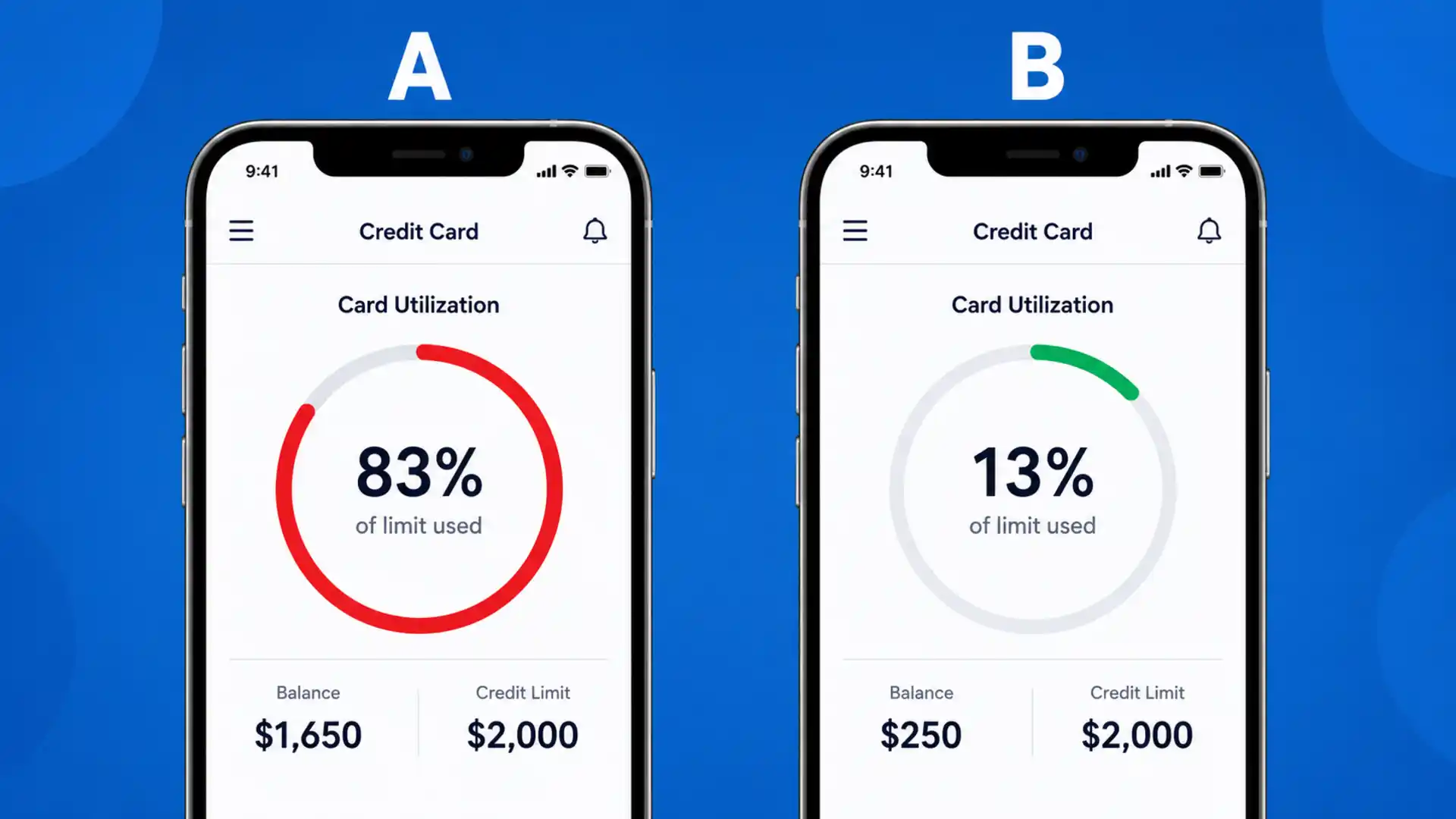
2. Your Credit Card Utilization Went Up
If reported balances on your credit cards increase, your credit score may react even if you intend to pay the balances later.
Credit scoring evaluates information reported in the credit file, so statement and reporting timing can matter.
myFICO identifies amounts owed as another major FICO scoring category and discusses revolving utilization as part of that category.
Source:
https://www.myfico.com/credit-education/credit-scores/amount-of-debt
That is why a credit card balance increase can affect a credit score even without a missed payment.
What to do if this is the problem
Review revolving balances.
Consider reducing heavily utilized balances where practical.
Understand when card issuers report account information.
Avoid adding unnecessary large charges to credit cards that already have high reported balances.
3. You Applied for New Credit
Applications for credit cards, personal loans, and other forms of financing may result in a hard inquiry when a lender checks your credit.
The CFPB explains that inquiries made by lenders when you apply for credit may affect your credit score, while checking your own credit report does not.
Source:
https://www.consumerfinance.gov/ask-cfpb/what-kind-of-credit-inquiry-has-no-effect-on-my-credit-score-en-321/
Several applications or newly opened accounts within a relatively short period can create more new-credit activity than a single application.
What to do if this is the problem
Avoid unnecessary additional applications while reviewing the cause.
Allow recent inquiries to age naturally.
Do not submit multiple unrelated applications simply because one lender declined an application.
4. You Closed a Credit Card
Closing a credit card can reduce your available revolving credit.
If balances remain on other cards, the same total revolving debt may represent a larger percentage of your available credit.
The CFPB cautions that closing a credit card can affect a credit score and that the effect depends on the broader credit situation.
Source:
https://www.consumerfinance.gov/ask-cfpb/does-it-hurt-my-credit-to-close-a-credit-card-en-1231/
If a card is already closed, focus on the balances and payment history of the accounts that remain open.
If you are considering closing a card, review how losing that available credit may affect your broader credit profile.
5. You Paid Off a Loan and the Score Dipped
Paying off personal loans or other installment debt can change the structure of a credit file, including the mix of open accounts.
A credit score change after paying off a loan does not mean carrying unnecessary debt would have been better.
Credit scoring systems evaluate multiple characteristics of a credit profile.
What to do if this is the problem
Avoid overreacting to the score movement alone.
Continue making remaining payments on time.
Manage revolving balances.
Avoid unnecessary new applications.
6. A Collection, Charge-Off, or Other Major Negative Item Appeared
A newly reported collection, charge-off, or other significant derogatory item deserves careful review.
What to do if this is the problem
Verify that the account and information are accurate.
Identify who is reporting or servicing the debt.
Clarify the account status.
Dispute information if it is inaccurate.
Keep records of relevant documents and communications.
7. There Is an Error on Your Credit Report
Credit reports can contain inaccurate or unfamiliar information, so unexplained score changes are worth reviewing carefully.
The CFPB identifies potential credit-report errors including accounts that do not belong to the consumer, incorrect account information, incorrect balances, and duplicated information.
Source:
https://www.consumerfinance.gov/ask-cfpb/what-are-common-credit-report-errors-that-i-should-look-for-on-my-credit-report-en-313/
Examples can include accounts that are not yours, inaccurate late payments, duplicate negative information, incorrect balances, or mixed identity information.
A credit score cannot determine whether a negative item is accurate or whether it belongs to you.
The scoring model reacts to the information supplied to it.
What to do if this is the problem
Review your credit reports.
Document the information you believe is inaccurate.
Dispute inaccurate information with the credit reporting company and, when appropriate, the company that furnished the information.
Keep copies of supporting records.
The CFPB provides guidance on how to dispute errors on a credit report.
Source:
https://www.consumerfinance.gov/ask-cfpb/how-do-i-dispute-an-error-on-my-credit-report-en-314/
If inaccurate reporting is the cause, this is where legitimate credit repair may become relevant: identifying information that is actually wrong and using the appropriate dispute process.
Credit repair does not mean that accurate negative information can simply be erased on demand.
8. Fraud or Identity Theft
If a credit score drop is sharp and you cannot explain it, unfamiliar activity deserves prompt investigation.
Review your credit reports.
Look for unfamiliar inquiries or accounts.
If identity theft is suspected, use IdentityTheft.gov for federal identity-theft information and recovery guidance.
Source:
https://www.identitytheft.gov/
Begin appropriate fraud and dispute procedures when necessary.
How to Diagnose the Drop Quickly
Step 1: Pull Your Reports
Checking or requesting your own credit report does not lower your credit score.
The Consumer Financial Protection Bureau states that requesting your own credit report does not hurt your credit score.
Source:
https://www.consumerfinance.gov/ask-cfpb/does-requesting-my-credit-report-hurt-my-credit-score-en-1229/
Official credit reports are available through:
https://www.annualcreditreport.com/
If you use credit monitoring, treat alerts as a starting point.
A credit monitoring alert may tell you that something changed, but the underlying credit report is where you can verify the account, balance, inquiry, payment status, or other reported detail.
Look for a newly reported late payment, a balance increase, a new inquiry, a closed account, a collection, unfamiliar information, or duplicate negative items.
Step 2: Compare Recent Reporting Periods
You do not need to analyze your entire credit history at once.
You are trying to identify the newest meaningful difference.
Ask:
What changed?
Which balance moved?
Did an account close?
Did a new inquiry appear?
Did something unfamiliar appear?
Step 3: Decide Whether Immediate Action May Help
Issues Where Immediate Action May Help
Unusually high reported utilization.
A statement-timing issue you can manage going forward.
Inaccurate credit-report information.
Suspected fraud or identity theft.
An account that is currently delinquent and can still be brought current.
Issues That Generally Require More Time
An accurate previously reported late payment.
Recent new accounts.
Legitimate collections or charge-offs.
Multiple recent applications.
A longer pattern of elevated credit risk.
That distinction matters because it creates more realistic expectations.
Not every credit score change can be reversed quickly, and different causes require different responses.
What to Do First Today
Pull your credit reports.
Identify the newest meaningful change.
Verify whether negative information is accurate.
Dispute genuine errors where appropriate.
Stop financial behavior that may be making the credit profile riskier.
Review heavily utilized revolving balances.
Avoid unnecessary new credit applications until you understand the cause.
If information appears inaccurate, use the CFPB dispute guidance.
Source:
https://www.consumerfinance.gov/ask-cfpb/how-do-i-dispute-an-error-on-my-credit-report-en-314/
What Will Not Fix the Problem by Itself
1. Treating Credit Monitoring Like a Repair Strategy
Credit monitoring can be useful for noticing changes, unfamiliar activity, new accounts, or inquiries.
But credit monitoring by itself does not improve a credit score.
It helps you identify changes. You still need to review the underlying information and determine whether action is appropriate.
2. Closing Accounts to Clean Things Up
Closing credit cards can reduce available revolving credit and may affect utilization if balances remain on other cards.
Account closure should therefore be evaluated based on the broader credit profile rather than used as a generic score-improvement strategy.
3. Applying for More Credit Cards or Personal Loans to Improve the Score
Opening new credit cards or taking out personal loans simply to chase a higher score can add inquiries, new-account activity, borrowing costs, and additional complexity.
New borrowing should address a genuine financial need rather than serve as a generic credit repair shortcut.
4. Ignoring a Delinquent Account
If an account is already behind, delaying action may allow the delinquency to progress.
Understanding the account status and available options is generally more useful than ignoring it.
Where Does Credit Repair Fit After a Score Drop?
Credit repair is most relevant when the problem involves inaccurate, incomplete, duplicated, or potentially fraudulent information on a credit report.
If the negative information is accurate, the path is usually different: bring accounts current where possible, lower revolving balances where practical, avoid unnecessary new applications, maintain consistent payment behavior, and give the credit file time to stabilize.
No legitimate credit repair process can guarantee a specific score increase or remove accurate information merely because it is damaging.
The CFPB explains that accurate negative information generally cannot be removed simply because it negatively affects a credit report.
Source:
https://www.consumerfinance.gov/ask-cfpb/is-it-possible-to-remove-accurate-negative-information-from-my-credit-report-en-1249/
Credit repair is primarily a correction process when report data is wrong.
Credit rebuilding is a behavior-and-time process when the reported information is accurate.
This separation helps prevent unrealistic expectations and keeps the focus on information and behavior that can actually be verified or changed.
Common Mistakes After a Credit Score Drop
Doing too many things at once.
Guessing instead of reviewing the reports.
Panic-applying for new credit cards or personal loans.
Closing credit cards without considering utilization.
Treating credit monitoring as a substitute for reviewing credit reports.
Focusing on score tricks instead of the actual cause.
Allowing one missed payment to become a repeated pattern.
A 30-Day Credit Score Triage Plan
Days 1–3: Identify the Cause
Pull your reports.
Compare recent reporting periods.
Identify the newest meaningful negative change.
Verify unfamiliar accounts or inquiries.
Days 4–7: Address the Highest-Priority Issue
If revolving balances are unusually high, consider reducing them where practical.
If an account is delinquent, determine what is needed to bring it current.
If information is inaccurate, follow the CFPB credit-report dispute process.
Source:
https://www.consumerfinance.gov/ask-cfpb/how-do-i-dispute-an-error-on-my-credit-report-en-314/
If fraud appears possible, investigate promptly.
Week 2: Stabilize
Set up payment reminders or autopay where appropriate.
Avoid unnecessary new applications.
Reduce avoidable spending on heavily utilized credit cards.
Create a consistent due-date system.
Week 3: Review Reporting Timing
Credit card balances are reported according to creditor reporting cycles.
That means the balance appearing on your credit report may differ from the amount you see after making a more recent payment.
Understanding reporting timing can help explain some short-term credit score movement.
Week 4: Review Again
Look for changes in reported balances.
Check for unexpected new negative information.
Review progress on legitimate disputes.
Make sure credit monitoring alerts match activity you recognize.
Confirm that you now have a clearer understanding of what caused the original score change.
The goal is not to force a particular score increase within 30 days.
The goal is to verify the information, address active problems, and stabilize the credit profile.
What Matters Beyond the Credit Score Number?
A credit score is important, but lenders may evaluate more than the score alone.
Depending on the lender and credit product, relevant information may include revolving utilization, recent late payments, the depth and age of credit history, recent applications, outstanding debt, and other underwriting criteria.
For example, someone with a generally strong credit score may still receive less favorable terms if high credit card balances, recent applications, or other risk factors appear in the broader file.
That is often the difference between reacting to a score and understanding the underlying credit profile.
A Credit Score Reality Check
I identified the most likely cause of the score change.
I checked my credit reports.
I reviewed recently reported balances and inquiries.
I verified unfamiliar negative information.
I know which issue deserves attention first.
I understand whether the issue involves inaccurate data or accurate negative information.
I am avoiding unnecessary new credit activity while investigating.
If you cannot confirm most of these points, the score drop itself may not be the main problem yet.
The first problem is that the cause is still unclear.
FAQ
Why Did My Credit Score Drop Suddenly?
A sudden credit score drop may result from a reported balance increase, a late payment, a new negative item, an account closure, recent credit activity, or inaccurate information.
The most useful first step is to compare recent credit reports and identify what changed.
Can One Late Payment Really Affect My Credit Score?
Yes.
Payment history is an important component of FICO scoring.
According to myFICO, payment history accounts for 35% of a FICO Score in its general scoring-factor breakdown.
Source:
https://www.myfico.com/credit-education/credit-scores/payment-history
The exact effect of an individual late payment depends on the broader credit profile and scoring model.
Can Credit Card Utilization Lower My Score Even If I Pay in Full?
Yes.
A credit scoring model may evaluate the balance reported by the creditor.
If a relatively high balance is reported before you pay it down, utilization may temporarily appear higher even if you later pay the account in full.
myFICO discusses revolving utilization as part of the amounts-owed category.
Source:
https://www.myfico.com/credit-education/credit-scores/amount-of-debt
Does Checking My Own Credit Report Hurt My Credit Score?
No.
According to the CFPB, requesting your own credit report does not hurt your credit score.
Source:
https://www.consumerfinance.gov/ask-cfpb/does-requesting-my-credit-report-hurt-my-credit-score-en-1229/
Official credit reports:
https://www.annualcreditreport.com/
Is Credit Monitoring the Same as Credit Repair?
No.
Credit monitoring helps you observe changes to your credit information.
Credit repair generally refers to identifying and disputing inaccurate or potentially fraudulent information.
Neither process determines a specific future credit score result.
Why Is My Credit Score Good but My Loan or Credit Card Terms Still Unfavorable?
Lenders may evaluate the broader credit profile rather than relying only on a credit score label.
High balances, recent late payments, limited credit history, recent applications, outstanding personal loans, or lender-specific underwriting criteria may affect borrowing terms.
What Should I Do First If I Cannot Explain the Drop?
Pull your credit reports.
Identify the newest meaningful change.
Verify whether unfamiliar information is accurate.
Credit monitoring can help you notice activity, but the credit report itself provides the information needed to investigate the cause.
If you identify inaccurate information, consult the CFPB credit-report dispute guidance.
Source:
https://www.consumerfinance.gov/ask-cfpb/how-do-i-dispute-an-error-on-my-credit-report-en-314/
A Credit Score Drop Is a Diagnosis Problem First
That is the cleanest conclusion.
Some score changes are routine.
Some are warning signs.
Some deserve prompt investigation.
The biggest mistake is treating them all the same.
A better response is:
Diagnose the change → verify the credit report → identify the cause → take appropriate action.
Identify what changed.
Verify that the information is accurate.
Address active problems.
Dispute inaccurate information where appropriate.
Avoid making the credit file unnecessarily riskier while investigating.
Give accurate negative information the time and consistent financial behavior required for rebuilding.
That is how an unexplained credit score drop becomes a problem you can evaluate systematically rather than react to emotionally.